

 Insights.
Changes in consumer behavior during the COVID-19 pandemic
22 Nov, 2021
Hotels
Source: The ESET Global FinTech Study
It has become increasingly common for people to stay home more often and spend time on the internet and with those closest to them. They avoid large gatherings and maintain social distance in stores. Consumer habits have changed and many people have switched to working from home. Research has shown that the greater and more pronounced a fear is, the greater will be the change in consumer shopping behavior. The economy of the whole world has slowed down, many workers have been laid off and wages have been reduced. As a result of the COVID-19 pandemic, consumers have drastically reduced their shopping trips to minimize the risk of spreading the infection. Instead, they are doing everything possible from the safety and comfort of their homes to reduce the transmission of the virus.
Changes occurring in consumer behavior
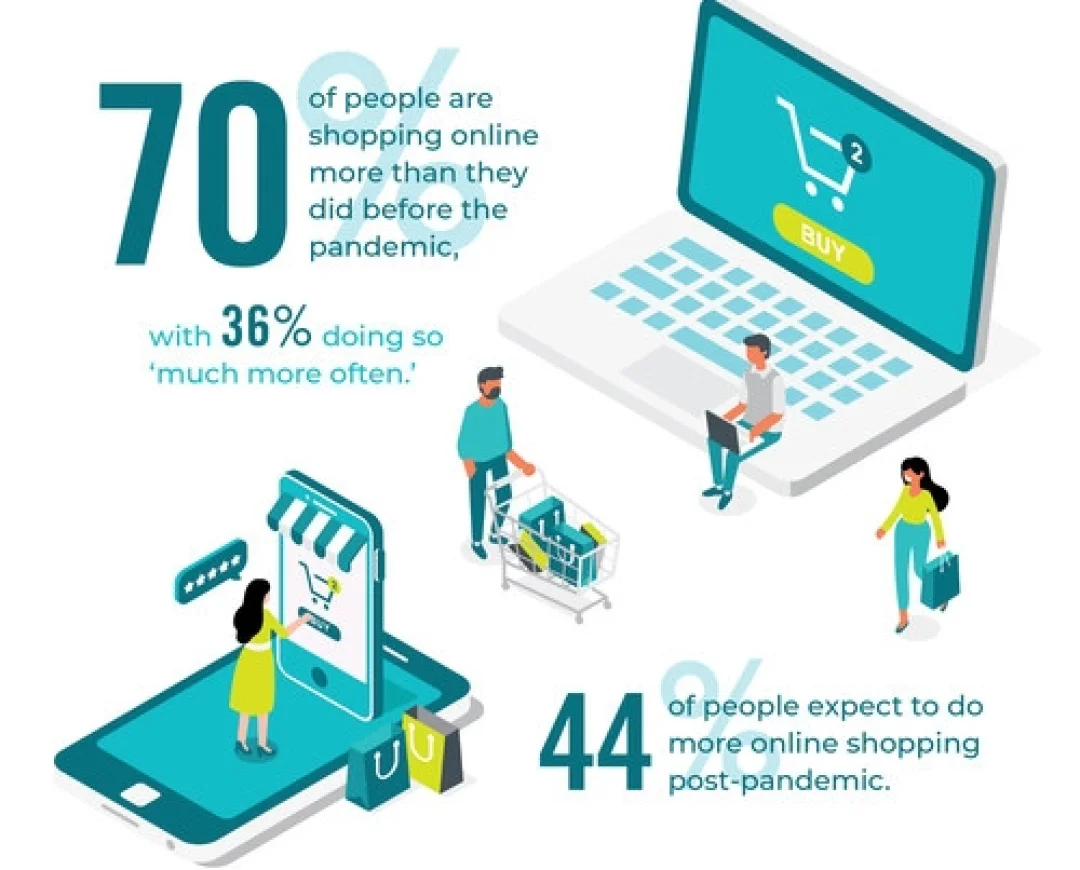
Since the very beginning of the virus outbreak (early 2020), consumers have changed behavior that significantly deviated from their usual shopping behavior. It is predicted that the pandemic will affect consumers and change their existing habits, and that online shopping will become more and more popular. During the pandemic, consumer shopping behavior was mainly influenced by fear. In general, the higher the level of fear, the more significant the change in consumer shopping behavior.
Consequences of the pandemic
- Reduced clothing purchases
- Increased purchase of personal care products
- Increased purchase of basic foodstuffs
- Increased purchase of cleaning products
- Increase in online shopping
- Increasing financial savings
In situations where the virus is spreading at an increasing speed, consumers are less and less willing to shop in stores. However, even during a pandemic, food is still a basic human need that we cannot live without. During the pandemic, food products and beverages accounted for as much as 35% of purchases among online shoppers.
Various world markets are seeing an increase in sales of laundry products and a general jump in sales of cleaning products. It has been shown that during COVID-19, people were more inclined to maintain hygiene than usual due to fear of infectionIt is predicted that customers will continue to shop online at a higher rate even after the pandemic, regardless of whether stores are open. The pandemic has caused an increase in digitization due to quarantine and physical distancing rules. Due to the closure of brick-and-mortar retail stores, online shopping has become the only means for consumers to meet their spending needs. COVID-19 has forced people to buy in this way, and there are fewer and fewer of those traditional ways of shopping.
During the pandemic, it was observed that financial savings became a key factor influencing customer behavior. With reduced incomes, people were less inclined to purchase expensive products. Some of the newly emerging changes will become permanent and consumers will continue to apply them even after COVID 19. Because of the pandemic, some long-term changes in consumer behavior are expected. Consumers will likely become more careful and cautious before making certain purchases, leading to more frugal spending habits.
The impact of the pandemic on consumer fear
1. Fear of an existential crisis
People all over the world are losing their jobs, organizations and businesses have closed and the entire economy has come to a standstill. Mass unemployment became the main feature of work during the Covid-19 virus crisis. In the long term, there is a fear that what started as a health crisis will develop into a deep economic crisis. Almost every fourth person fears losing their job due to the emerging crisis. Many people are expected to have a different perspective on the labor market after the pandemic. Their priorities will likely change, particularly in relation to work and employment.
2. Fear of social contact
Consumers are afraid to buy goods in brick-and-mortar stores due to government restrictions and fear of contagion. Despite the reopening of physical retail stores in many countries, consumers remain cautious. Fear of large crowds that could spread the virus and a desire to avoid physical contact with others continue to influence consumer behavior. 9 out of 10 consumers have changed their traditional shopping habits, which means that now, instead of going to stores, they shop from their homes precisely because of the fear of infection and social contact with others.
3. Fear of alienation
In a desperate attempt to contain the spread of COVID-19, governments around the world have imposed restrictions on social contact and large gatherings. Social distancing separates individuals from one another and can foster feelings of alienation and meaninglessness. Socially, this refers to face-to-face relationships being replaced with virtual online interactions and friendships created through Facebook and various other social networks. It is believed that social distancing can negatively affect the mental health of individuals so that they feel alienated.
The results
B.I.D. The group conducted the research in June 2021. The goal of this survey was to find out how the COVID-19 pandemic changed the way people bought things online and in stores.
We wanted to know if things like getting sick from the virus, thinking about life and death, and feeling alone affected what people bought.
We looked at different types of products, like food, drinks, cleaning supplies, and clothes. We studied how much more or less consumers shopped online and in stores during the pandemic compared to before the pandemic.
Based on survey results, the average response for food, drink, and hygiene product purchases was higher for offline purchases compared to online purchases. This suggests that despite the pandemic and various other concerns discussed earlier, consumers still prefer to buy these types of products in physical stores. Furthermore, for the purchase of clothes, the situation is reversed. For respondents, online shopping for this type of product increased during the pandemic, as opposed to shopping in physical stores. Regarding the three fears, the most feared among respondents was contracting COVID-19, which was expected. Next was the existential crisis, followed by the fear of alienation.
You can read more information about the topic explained above at the following links:
https://onlinelibrary.wiley.com/doi/full/10.1111/ajae.12170
https://www.sciencedirect.com/science/article/pii/S0969698921001089
https://journals.sagepub.com/doi/full/10.1177/0972063420940834
https://www.sciencedirect.com/science/article/pii/S0969698920309814
https://journals.sagepub.com/doi/full/10.1177/0022167820934229